Adiabatic Dry Cooler For Large Air Compressor Systems
Adiabatic Dry Cooler For Large Air Compressor Systems
When the pressure acting on a mass of air decreases, the air mass is allowed to expand, and as its volume increases, its internal energy decreases and its temperature falls. In an adiabatic dry cooler, a fan draws air through a coil. When the hot air comes into contact with a wet pad or water spray, the air temperature is reduced by adiabatic means, thus allowing the coil to achieve sensible heat cooling and the temperature drops below the ambient dry bulb temperature.
When the ambient temperature is below the set point of the fluid being cooled, the cooler operates in dry mode, with the fan drawing ambient air through the coil for cooling. As the ambient temperature rises, the cooler switches to adiabatic mode to reduce the temperature of the incoming air when dry cooling alone cannot achieve the desired cooling effect. Through intelligent control, it is possible to balance fan usage and water delivery to achieve water or energy savings.
Structural Components
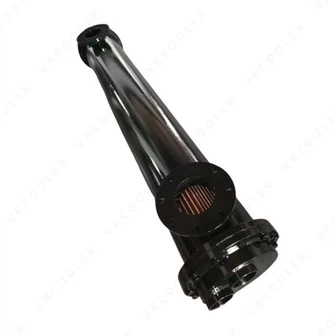
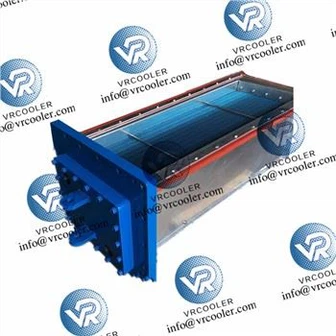
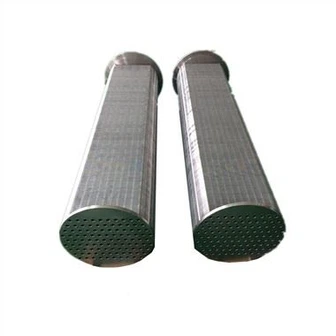
Cooling Coil: Usually made of copper or stainless steel tubing, the inside circulates fluids that need to be cooled from a large air compressor system, such as glycol solution, water, etc. The cooling coil has fins on the outside surface, which are used for cooling the air. There are fins on the outer surface of the coil to increase the heat dissipation area and improve the heat exchange efficiency.
Fans: Installed on one side or on top of the cooler, they are used to force air flow. According to the size of the cooler and the cooling demand, more than one fan can be equipped to provide enough airflow to accelerate the cooling process.
Frame structure: Used to support components such as cooling coils and fans, it is usually made of steel or aluminum alloy structure with good stability and strength to withstand the weight of the equipment and various forces during operation.
Adiabatic pre-cooling components: including wet pads or water spray devices. Wet pads are generally made of water-absorbent and corrosion-resistant materials, while the water spraying device evenly sprays water on the surface of the air inlet channel or fins through nozzles to realize the adiabatic cooling of the air.
Advantages
Significant energy savings: up to 20% compared to other adiabatic cooling solutions. Intelligent control of the fan and water system reduces energy consumption by adjusting the operating mode according to actual demand.
Excellent water saving performance: Compared with traditional water-cooled cooling equipment, it does not consume large amounts of water and only uses a small amount of water for adiabatic cooling when necessary, effectively saving water.
Stable and reliable operation: the fan and water supply system adopt redundant design, even if part of the components fail, the system still runs reliably, ensuring uninterrupted heat dissipation for critical loads. In cold environments, the system can be switched to dry operation mode to avoid the risk of icing and realize stable operation throughout the year.
Convenient installation: The equipment is shipped from the factory as a whole, eliminating the need for on-site assembly, and can be lifted into place once, significantly reducing construction complexity and time costs. Smaller footprint: Compared with traditional adiabatic cooling solutions, the footprint can be reduced by 20%. Only a single point of power access, control cable pre-set complete, support plug and play type rapid deployment, significantly shorten the field installation cycle.
Application Scenario
Industrial field: In chemical, petroleum, metallurgy and other industries, it is used for the cooling of large air compressor systems to ensure the stable operation of the compressor and the continuity of the production process.
Power industry: It can be used for the cooling of air compressors in power plants to provide stable compressed air for power generation equipment and support the high efficiency of the power generation process.
Data Center: It is used for cooling air compressors in data centers to maintain the low temperature environment in data centers, ensure the normal operation of servers and other equipment, and improve the reliability and service life of the equipment.