330MW Hydrogen Cooled Generator: The Core Cooling Solution For Efficient Power Generation
Core principles and system composition
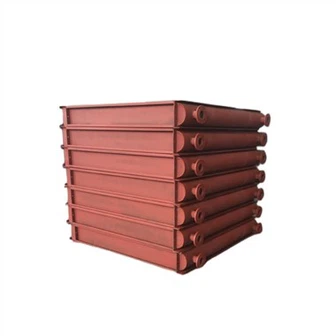
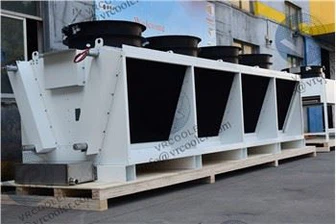
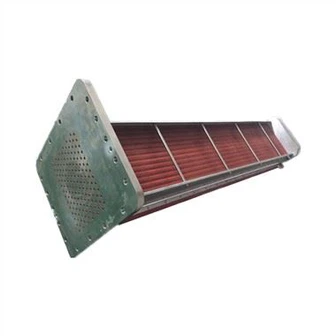
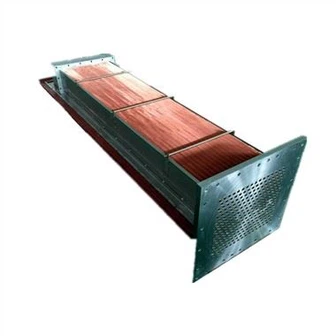
The cooling system of the 330MW hydrogen cooled generator is centered around closed-loop circulation, achieving precise temperature control through efficient heat exchange of hydrogen gas. The overall system consists of four key components, which work together to ensure stable operation of the equipment.
1. Working principle
When the generator is running, the propeller fans at both ends of the rotor drive hydrogen gas to circulate in a closed manner inside the casing, flowing through the stator core air duct and rotor winding ventilation holes in sequence, absorbing the heat generated by the winding and core; After absorbing heat, the hot hydrogen gas enters the hydrogen cooler, exchanges heat with the circulating water inside the tube, cools down, and returns to the inside of the generator to continuously remove heat. The temperature of the stator winding is controlled within a safe range of ≤ 90 ℃ and the temperature of the iron core is ≤ 80 ℃ [7]. The system maintains hydrogen purity (≥ 98%) and pressure (0.3-0.5MPa) through a hydrogen replenishment device, further improving thermal conductivity efficiency.
The core advantages of hydrogen cooling technology
Compared to air cooling and water cooling solutions, the 330MW hydrogen cooled generator has significant advantages in efficiency, energy consumption, and safety, especially suitable for the operational needs of large and medium-sized generator units.
1. Increase heat dissipation efficiency by 3-5 times
The thermal conductivity of hydrogen is about 7 times that of air, and it has strong fluidity. It can penetrate into narrow spaces such as winding gaps and iron core slots, quickly and uniformly dissipate heat. Under the same load, the winding temperature is reduced by 30-50 ℃ compared to air-cooled units, greatly extending the insulation life.
2.Reduce energy consumption and improve unit efficiency
The density of hydrogen is only 1/14 of air, and the wind resistance is extremely small during high-speed circulation. The ventilation and mechanical losses are reduced by 60% -80% compared to air-cooled units, which can increase the overall efficiency of the generator by 0.7% -1.0% and save a lot of electricity costs annually.
3. Safe and reliable, suitable for high load operation
Hydrogen has stable chemical properties and does not support combustion (it can only explode when mixed with air to 4% -75%). It does not produce ozone under corona discharge and can protect insulation; At the same time, the system adopts a fully enclosed airtight structure and a sealed oil system to effectively prevent leakage and meet the long-term full load operation requirements of the 330MW unit.
Key technical points
1. Ventilation and cooling design
Adopting a four in five out multi flow ventilation system, the rotor body is divided into four inlet zones and five outlet zones along the axial direction. The rotor winding adopts air gap milling hole oblique flow internal cooling, and the end winding adopts longitudinal and transverse hydrogen internal cooling to ensure uniform heat discharge and avoid local overheating [9].
2. Sealing and safety control
The sealing oil system adopts a single flow ring sealing tile, which seals the gap between the rotating shaft through an oil film to prevent hydrogen gas from leaking out and air from entering;
Configure a hydrogen dryer to adsorb moisture through molecular sieves and control the hydrogen dew point below -20 ℃ to prevent insulation from getting damp;
By combining a trace hydrogen analyzer with soap water leak detection, regular inspections are conducted on flanges, valves, end caps, and other vulnerable points to ensure that the leakage rate meets national standards [15].
3. Purity and pressure monitoring
The purity of hydrogen should be maintained at 95% or above (preferably 98%), and the system will automatically alarm when the purity drops to 95%; The system pressure is usually controlled at 0.3-0.5MPa, and high-pressure environment can further enhance the thermal conductivity of hydrogen gas, suitable for 330MW high load conditions .

Application scenarios and value
330MW hydrogen cooled generators are widely used in large-scale thermal power plants, distributed energy projects, regional power supply centers, and other scenarios, especially suitable for base load units that require long-term full load operation.
1. Core equipment of thermal power units
As the core equipment of 330MW thermal power units, hydrogen cooled generators can adapt to the heat dissipation needs of supercritical and ultra supercritical units, improve the power generation efficiency of the units, reduce the power consumption rate of the plant, and reduce maintenance costs, helping thermal power units achieve energy conservation and consumption reduction [11].
2. Distributed energy and emergency power supply
In distributed energy projects, the 330MW hydrogen cooled generator can flexibly adapt to various heat sources such as gas turbines and biomass power generation, and quickly respond to load changes; As an emergency power supply equipment, its efficient heat dissipation and stable operation capability can ensure the continuous supply of regional power in case of power grid failure.
3. Industry value and economic benefits
Efficiency improvement: Compared to air-cooled units, the power generation efficiency has increased by 0.7% -1.0%, with an annual increase of approximately 2.3-3.3 million kWh (calculated based on 7000 hours of operation per year);
Energy consumption reduction: Ventilation losses are reduced by 60% -80%, saving over 1 million kWh of factory electricity annually and lowering operation and maintenance costs;
Safe and reliable: Reduce unplanned downtime caused by overheating, improve equipment availability, and ensure stable power supply to the power system.
Operation, Maintenance, and Safety Standards
1. Key points of daily maintenance
Daily monitoring of hydrogen purity, pressure, and leakage rate. If the purity is below 98%, hydrogen should be replenished in a timely manner, and if it is below 95%, the machine should be shut down for troubleshooting;
Regularly clean the scaling inside the hydrogen cooler tubes to ensure heat transfer efficiency, and adjust the cooling water flow rate in a timely manner when the cooling water temperature is abnormal;
Check the oil quality and pressure of the sealing oil system. The sealing oil pressure should always be 0.05-0.1MPa higher than the hydrogen pressure to prevent oil film rupture;
Conduct hydrogen leak detection once every quarter, using a trace hydrogen analyzer to cover the entire system. When shutting down, soap water can be used to check for leaks.
2. Safety operation standards
Hydrogen replacement requires the use of CO ₂ as an intermediate medium, strictly following the process of "discharging hydrogen first, then charging hydrogen" to prevent hydrogen oxygen mixture explosion;
Install a hydrogen concentration monitor in the computer room, with an alarm threshold of ≤ 1% (volume fraction), and the linked exhaust system will automatically start;
Operators must hold a certificate to work, be familiar with the emergency response process of hydrogen cooling systems, and be equipped with safety equipment such as fire extinguishers and chemical protective suits.
Industry standards and technological trends
1. Core industry standards
The design, maintenance, and operation of a 330MW hydrogen cooled generator shall comply with the following national standards and industry specifications on the National Standard Information Public Service Platform [14]:
DL/T 1766.4-2021 "Guidelines for Maintenance of Water Hydrogen Hydrogen Cooled Steam Turbine Generator Part 4: Maintenance of Hydrogen Cooling System"
NB/T 25068-2017 Technical Conditions for Hydrogen Oil Water System of Nuclear Power Plant Generator
The National Energy Administration's "Twenty Five Anti accident Measures" (clarify the standard for handling hydrogen leakage: ≤ 0.3m ³/d is normal, ≥ 0.3m ³/d is planned for defect elimination, and ≥ 5m ³/d is immediately shut down)
2. Technological development trends
Full hydrogen cooling technology upgrade: using hydrogen gas with a purity of ≥ 99.9% as the cooling medium for the stator, rotor, and iron core, replacing traditional water hydrogen cooling, further improving efficiency, and controlling hydrogen leakage below 0.5m ³/d (only 40% of the national standard);
Intelligent monitoring and sealing innovation: Integrating AI and high-precision optical sensing technology to achieve real-time intelligent monitoring of hydrogen leakage, purity, and pressure, while optimizing sealing devices to reduce leakage risks [11];
Low loss design optimization: By using technologies such as elastic support at the rotor end and magnetic shielding at the stator end, mechanical vibration and losses are reduced, and equipment life is extended.
Summary
The 330MW hydrogen cooled generator, with its core advantages of efficient heat dissipation, low energy consumption, and high safety, has become an ideal cooling solution for 330000 kilowatt level power generation units. Its scientific system design, strict safety control, and wide application adaptability can not only meet the long-term operational needs of large thermal power units and distributed energy projects, but also help the power system achieve energy conservation, consumption reduction, safety, and stability. With the continuous innovation of technologies such as full hydrogen cooling and intelligent monitoring, the 330MW hydrogen cooled generator will demonstrate broader application prospects in the field of power equipment, providing core support for global energy transformation.