

What materials are used to make air compressor coolers?
If you’ve ever stood next to a running industrial air compressor, you’ve felt that steady, deep thrum and the wave of warm, pressurized air it emits. What you might not notice is the cooler tucked somewhere in the compressor’s casing (or piping system) working quietly behind the scenes to keep the machine running efficiently. As a supplier of air compressor coolers, I get asked all the time: “What materials go into these components that handle hot, pressurized air day in and day out?” It’s a great question—because the right materials aren’t just about durability; they’re about performance, energy use, and avoiding costly downtime. Over years of working with manufacturing, construction, and energy clients, I’ve learned that every material choice comes down to balancing heat transfer, corrosion resistance, and cost, and today I want to break down exactly what we (and most reputable cooler suppliers) use, along with real-world examples that show these materials in action.
Let’s start with the core function of an air compressor cooler. Whether it’s an intercooler (placed between compressor stages to cool air before it’s compressed further) or an aftercooler (at the end, to cool air before it’s sent to the system), the job is simple: move heat from the hot compressed air to a secondary medium—usually ambient air or water. To do that, the material needs to pull heat away quickly, hold up under pressure and temperature swings, and not degrade from the contaminants in compressed air (like moisture, oil, or industrial particulates). That’s why the primary materials we use most often are copper, aluminum, and stainless steel—each with specific strengths that make them ideal for different applications.
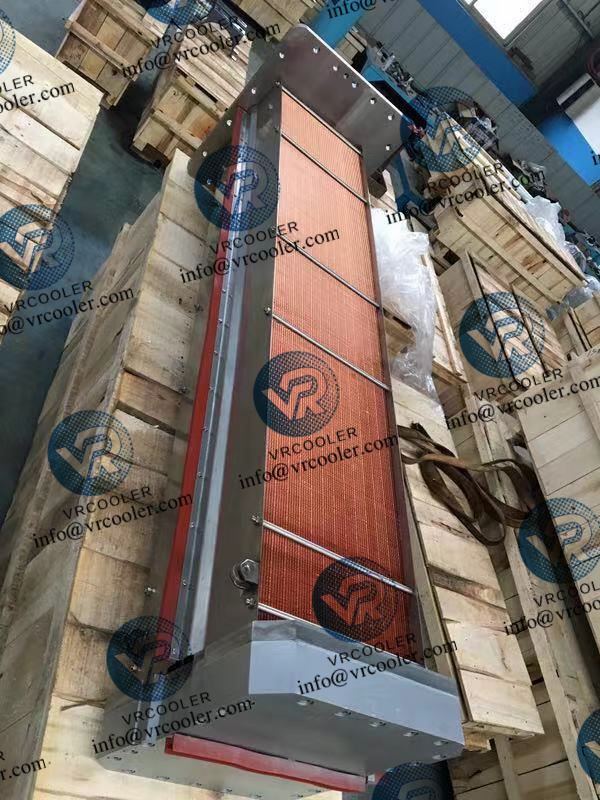

First up is copper. Copper has been a go-to for heat exchangers for over a century, and for good reason: it has one of the highest thermal conductivities of any common metal—around 401 W/m·K. That means it transfers heat fast, which is critical for compressors that run hot. Back when I first started in this industry 12 years ago, copper was the default for intercoolers on smaller, reciprocating compressors. It’s malleable too, so it’s easy to form into the thin fins and tubes that maximize surface area (another key part of efficient cooling). For example, when we supply the Ingersoll Rand Intercooler, we use seamless copper tubes paired with copper fins—this combination is lightweight, doesn’t add unnecessary bulk to the compressor, and handles the moderate pressures (100 to 250 PSI) common in reciprocating models. That said, copper does have a weak point: it’s prone to corrosion when exposed to large amounts of moisture or acidic contaminants in compressed air. So we don’t use it for heavy-duty, high-pressure rotary screw compressors that run for 24-hour shifts.
That’s where aluminum comes in. Aluminum’s thermal conductivity is lower than copper (around 205 W/m·K) but still impressive, and it’s far cheaper, lighter, and more resistant to corrosion from many of the contaminants in modern compressed air systems. Over the past 15 years, aluminum has become the top material for rotary screw compressor coolers, which are workhorses in industrial facilities. The key with aluminum is that it’s usually used in its fin form—thin, corrugated aluminum fins that are brazed to aluminum tubes. The brazing process uses a non-corrosive alloy, so we can build coolers that handle 150 to 300 PSI for long periods without rusting. For clients looking for Samsung compressor coolers that balance efficiency and cost, aluminum is our material of choice. For example, the SAMSUNG HP16-000400D Heat Exchanger is made entirely of aluminum, engineered to handle the high temperatures (up to 350°F) and pressures of Samsung’s mid-range rotary screw compressors. It’s also more energy-efficient than older copper designs because the aluminum fins create more airflow and the material itself doesn’t add extra weight to the compressor, reducing the load on the unit’s motor. That’s a big selling point for manufacturing plants that run compressors 24/7—even a 5% gain in efficiency translates to thousands of dollars in energy savings each year.
But aluminum isn’t perfect. For ultra-heavy-duty applications—like compressors in oil and gas operations, or facilities that use very wet, high-acid compressed air—aluminum can corrode over time. That’s where stainless steel comes in. Stainless steel’s thermal conductivity is lower than both copper and aluminum (around 15 W/m·K), but its corrosion resistance is unmatched. It can handle temperatures up to 1,200°F and pressures up to 1,000 PSI, making it the material of choice for aftercoolers in harsh environments. When we supply the Samsung Compressor AfterCooler for oil and gas clients, we use 316L stainless steel—this grade has extra chromium and molybdenum, which resists pitting from saltwater, acidic condensate, and other harsh chemicals common in that industry. 304 stainless steel is another option for less extreme heavy-duty applications, like food and beverage plants where compressed air might come into contact with mild food-grade contaminants. We’ve seen clients switch to stainless steel coolers in recent years because the upfront cost is higher, but the replacement cycle jumps from 2 to 3 years for aluminum to 8 to 10 years for stainless steel. For facilities that can’t afford unplanned downtime, that tradeoff is worth it.
Beyond these three core metals, there are secondary materials that play a critical role in the cooler’s performance. First, brazing materials—when we join tubes and fins, we use alloys like aluminum-silicon for aluminum coolers and copper-silver for copper coolers. These alloys have lower melting points than the core materials, so they create a strong, leak-proof bond without damaging the tubes or fins. We also use gaskets and seals made from nitrile rubber or silicone. Nitrile is the standard for most applications because it resists oil and moderate temperatures, while silicone is used for coolers that handle very hot air (over 400°F).
Another point I often explain to clients is why the combination of materials matters as much as the materials themselves. For example, when we build the Samsung Compressor Cooler TM1250, we use copper tubes with aluminum fins. Wait—copper tubes and aluminum fins? Isn’t that a recipe for galvanic corrosion? It sounds counterintuitive, but when we separate the two metals with a special coating (like a zinc-rich primer) and ensure there’s no direct contact between them, the combination works great. The copper tubes handle the high pressure inside the cooler, while the aluminum fins maximize heat transfer with the ambient air, and the coating prevents corrosion. This hybrid design is perfect for construction sites, where Samsung TM1250 compressors are used in outdoor, dusty environments that demand both durability and efficiency.
Now, let’s talk about real-world results. A few years ago, we worked with a automotive parts manufacturing plant that was using old copper coolers on their rotary screw compressors. They were replacing every 18 months because the copper tubes were corroding from the moisture in their compressed air system. We replaced them with aluminum coolers (specifically the SAMSUNG CAFV25000-G01 Heat Exchanger) and added a water separator to their system to reduce moisture. The coolers are now in their fifth year of operation with no signs of corrosion, and their energy use dropped by 7% because the aluminum design transfers heat more efficiently. Another client, a natural gas processing facility, was using aluminum aftercoolers that failed every 2 years due to acidic condensate. We swapped them for 316 stainless steel coolers, and they haven’t had to replace them in 9 years—saving over $200,000 in replacement and downtime costs in that time.
If you’re wondering which material is right for your compressor, here’s a quick cheat sheet I share with all our clients: If you have a small reciprocating compressor with moderate pressure and clean air, go with a copper intercooler. For mid-range rotary screw compressors in clean industrial environments, aluminum is the sweet spot. For heavy-duty, harsh environments with high pressure or corrosive contaminants, stainless steel is the way to go.
At the end of the day, air compressor coolers are one of those unsung parts that keep entire operations running. The materials you choose don’t just affect the cooler’s lifespan—they affect your energy bills, maintenance costs, and how often you have to shut down for repairs. As a supplier, I don’t just sell coolers; I help clients pick the right materials for their specific needs, so they get the most value from their investment.
If you’re looking to replace your old cooler or upgrade to a more efficient model, I’d be happy to walk you through the best material options for your compressor, whether it’s an Ingersoll Rand, Samsung, or another brand. Get in touch with our team to discuss your needs, and we’ll provide a custom solution tailored to your operation.
References
Heat Transfer Research Inc. (2022). Thermal Conductivity of Common Metals for Heat Exchangers. Industrial Heat Exchanger Journal.
Compressed Air and Gas Institute (2021). Material Selection Guidelines for Air Compressor Coolers. CAGI Technical Report.
National Association of Corrosion Engineers (2020). Corrosion Resistance of Metals in Compressed Air Contaminants. NACE International Publication.
Samsung Techwin (2023). Material Specifications for Compressor Coolers. Samsung Industrial Equipment Documentation.